Evaneos
An immersive AI experience designed for Evaneos. The visitor tells the AI about their dream trip, and receives three responsible alternatives shaped as travel postcards.
Product Designer · Artefact (pro bono) · Evaneos · 2025
The brief
Evaneos and Artefact partnered to reshape how travel is imagined and chosen. The premise: use AI and data to help travelers travel more consciously, and to show the impact of their choices on the planet and on local communities.
The concept was built as a single immersive experience. It had to intrigue, invite to try, leave a mark, and travel by word of mouth.
The problem statement
How do you design an experience that is at once attractive and memorable, one that influences future travel decisions and makes people want to share it?
Three audiences, three levers
Before defining the product, we mapped three proto-personas. Each one points to a different role the experience could play, and a different lever to design around.
Virality
New-experience seekers
Curious, connected, share-prone. They turn the experience into word of mouth.
Buy-in
Eco-conscious travelers
Already aware of the impact. Looking for ways to keep traveling without giving it up.
Awareness
Engaged families
Want meaningful trips without the planning headache. Drawn in by a playful format.
The bet: a postcard, not a quiz
Early hypotheses played with mascots, gauges, and badge systems. We tested them. They generated engagement but felt gimmicky for a brand like Evaneos, whose voice is closer to a travel essay than a product tour.
So we shifted the metaphor. The visitor isn't being measured; they're being read. The interface borrows from old travel postcards: cream paper, sober serif typography, soft stamps. The AI doesn't score, it whispers, and offers three destinations that match what was said and, more importantly, what was implied.
The narrative, in four beats
The whole experience fits into four moments. Each one was designed to do one specific thing: contract, immersion, reveal, projection.
Préface
Set the contract. The visitor learns that the AI will translate their dream into three responsible alternatives.
Question
A sensory prompt asks the visitor to close their eyes and feel the trip: sand, mountain air, jungle humidity.
Reveal
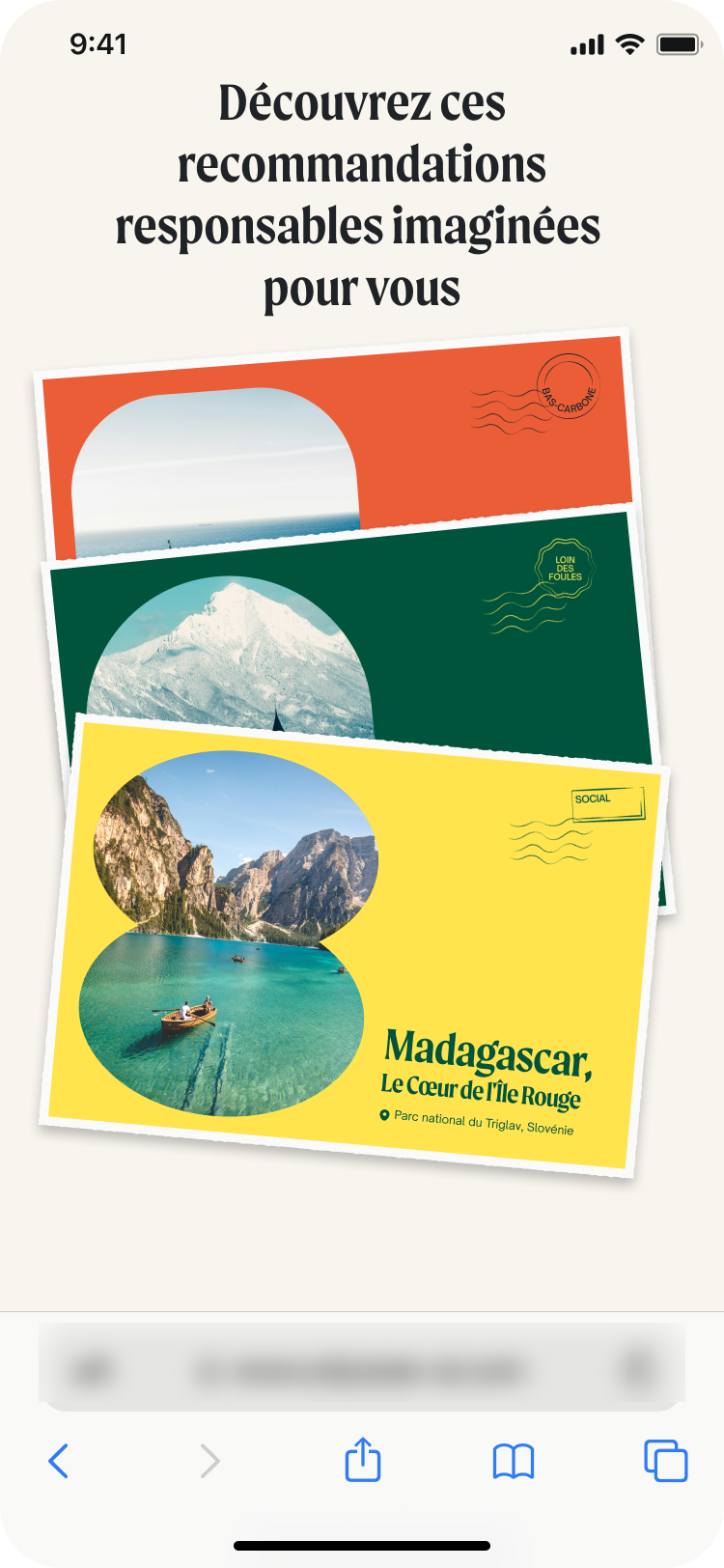
Three postcards arrive. Each one carries a stamp: nature, peoples, social impact.
Inspiration
The visitor opens one card and discovers the destination, the local community, and the reason it was chosen.
Préface, setting the contract
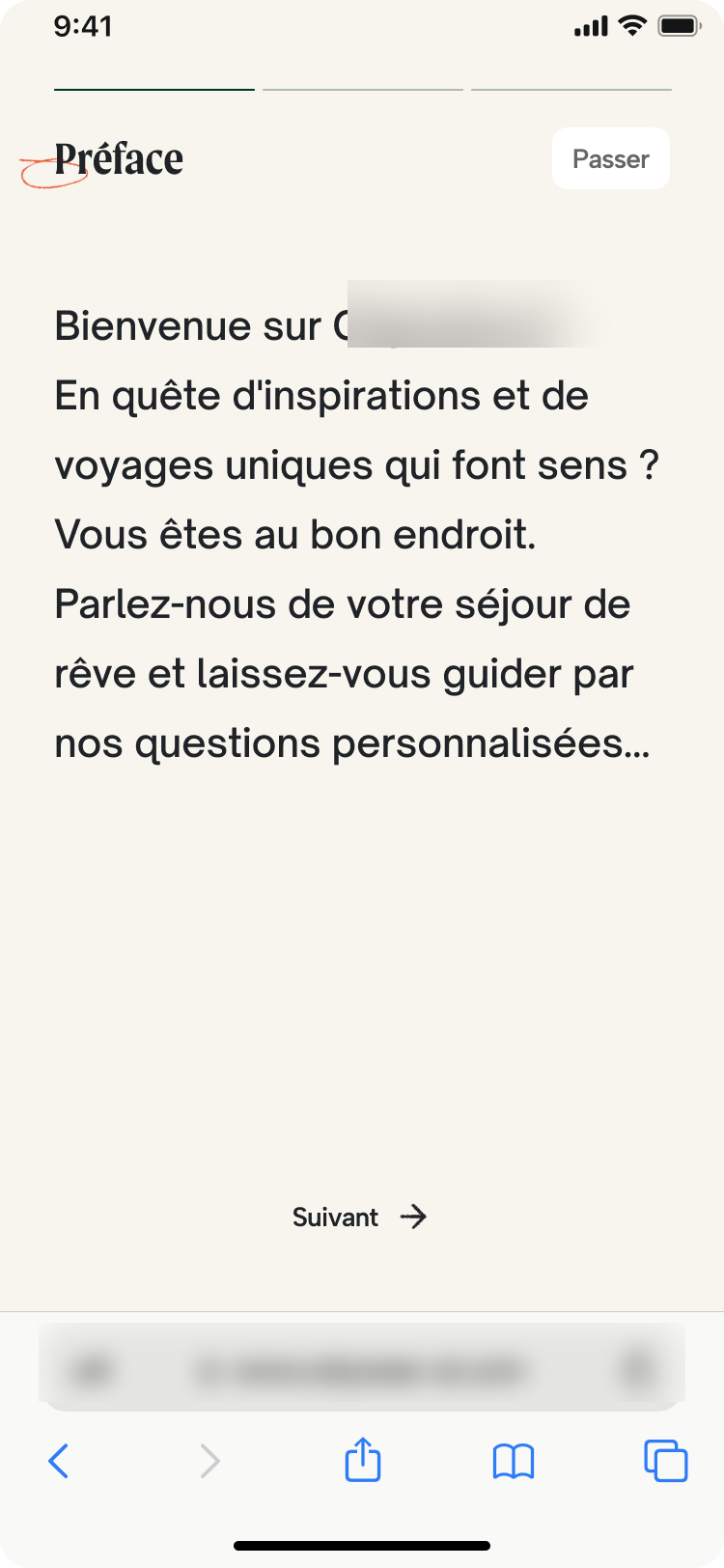
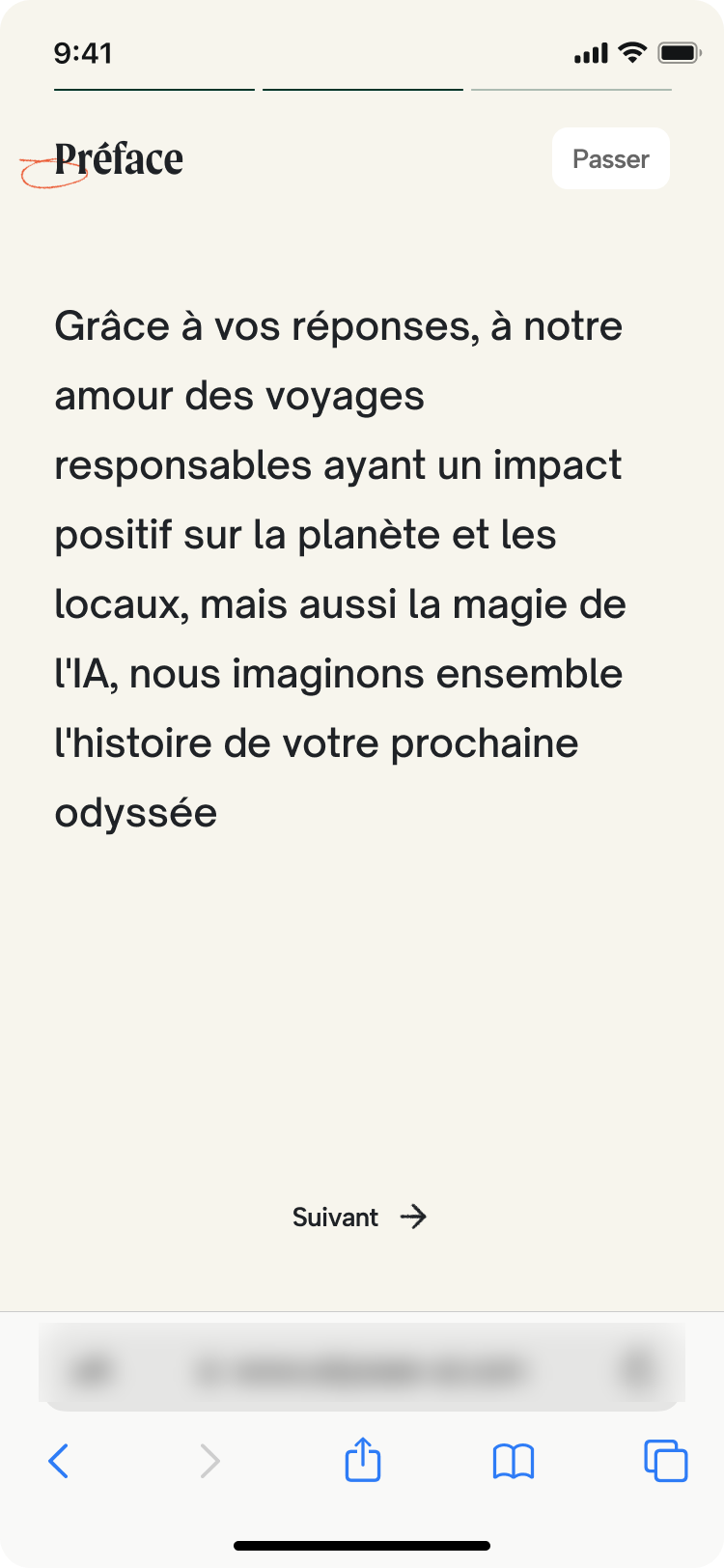
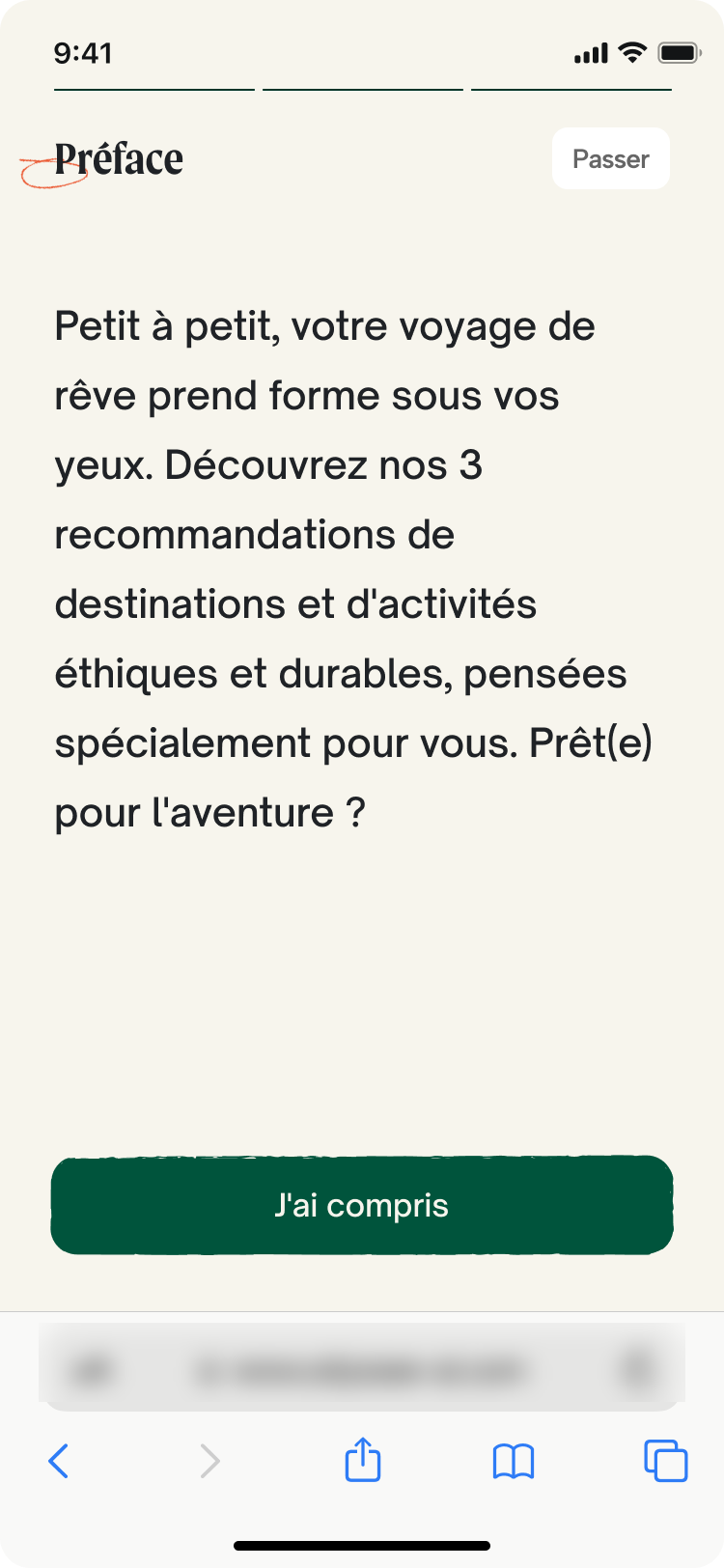
Before any question, the visitor reads a short preface. It announces what the AI will do with their answers: turn them into three responsible recommendations, with a positive impact on the planet and on local communities. The contract is explicit. The wording stays warm.
Question, sensing before describing
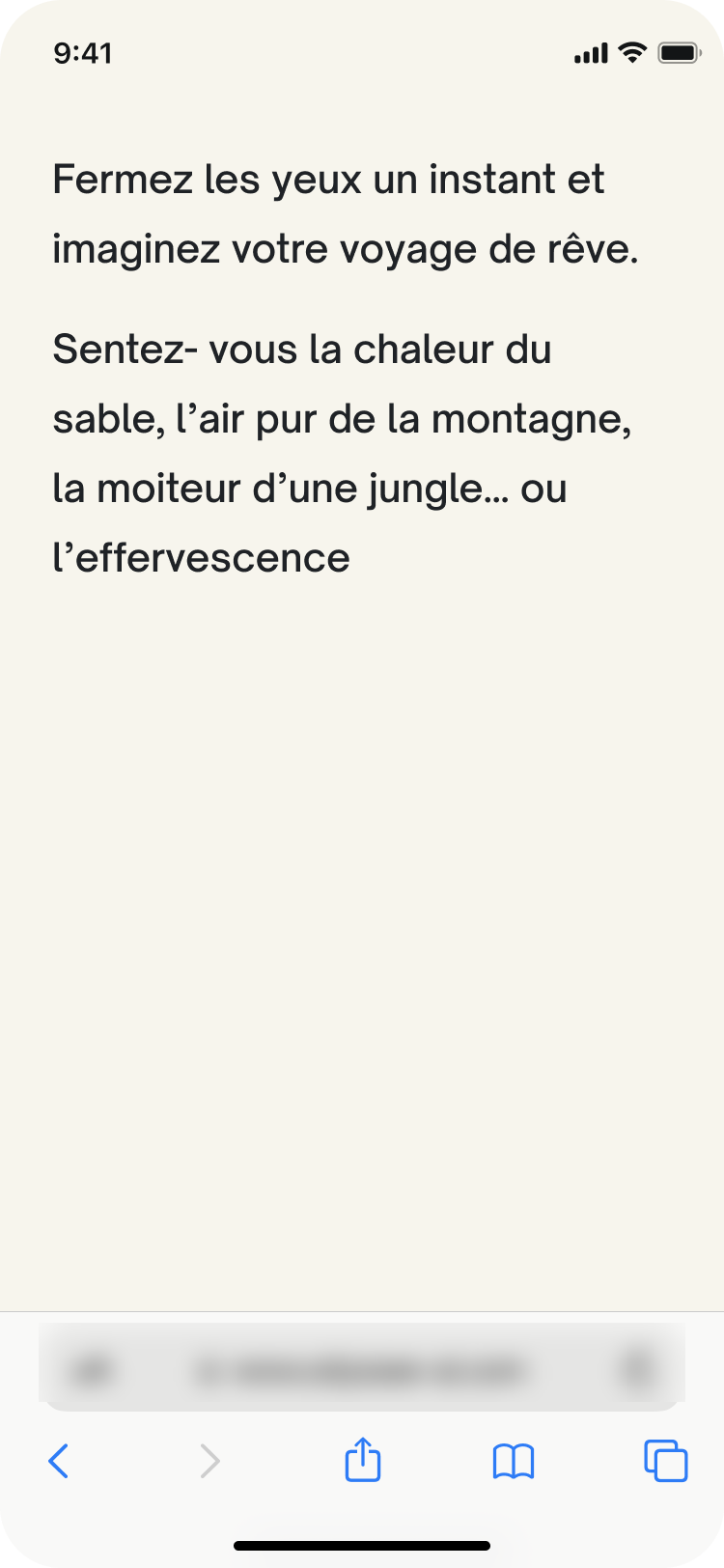
The first question doesn't ask for a destination. It asks for a sensation. "Close your eyes for a moment and imagine your dream trip. Do you feel the warmth of sand, the pure air of the mountain, the humidity of a jungle, or the effervescence of a city?"
The shift is small in wording but large in implication. The AI isn't looking for keywords like "Bali" or "Italy." It is looking for what the visitor would never type into a search bar.
Prototype · try it
Close your eyes for a moment and imagine your dream trip. What do you feel?
The reveal, three postcards, three stamps
After a short loader, three postcards arrive. Each one carries a stamp that signals its angle: nature, peoples, social impact. The visitor flips through them with their finger, the way you would in a real card rack.
One postcard, opened
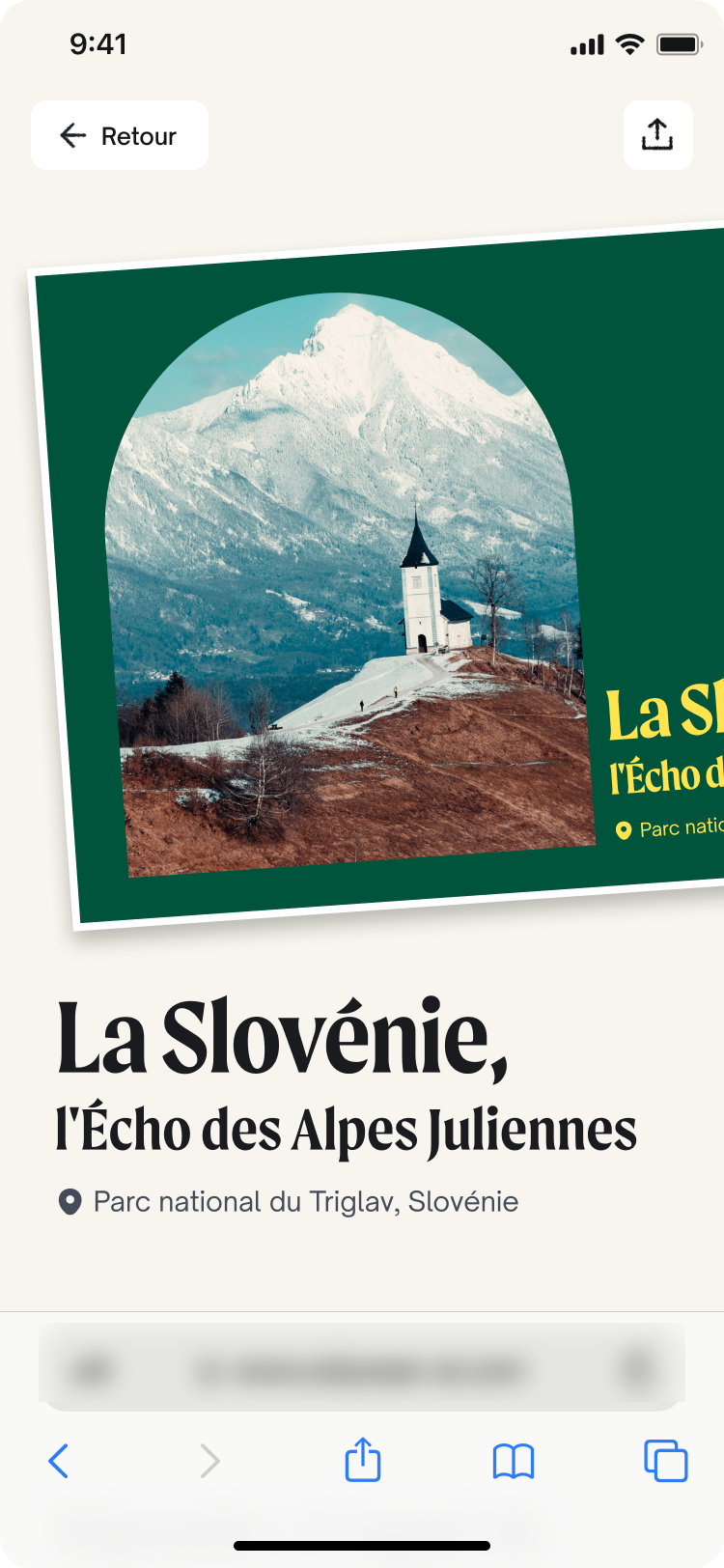
Tapping a postcard opens the full destination. Title set as a book chapter, location as a quiet caption, an AI-written paragraph that picks up phrases from the visitor's answers and folds them into the story. The page reads like an editorial piece, not like a product card.
What we measured, and what we didn't
Success was defined in three layers: engagement (completion rate, time spent, qualitative feedback, organic shares), visibility (press and media relays), and acquisition (qualified leads). Detailed KPIs were left for the next phase, once the mechanism had been validated with real users.
The product was validated by the Evaneos team. It did not reach production: the data infrastructure required to make the AI feel personalized in real time was further out than the launch window. The design work, the mechanism, and the test plan stood; the rest was a question of timing.
What I took away
The most interesting design choice was refusing the quiz format. On paper, a gamified path is the safer bet for engagement. In practice, the brand asked for restraint and the mechanism asked for a mirror. The postcard answered both.
Next project
Ensweet